An interview with Gov. Cooper about School Voucher Expansion legislation
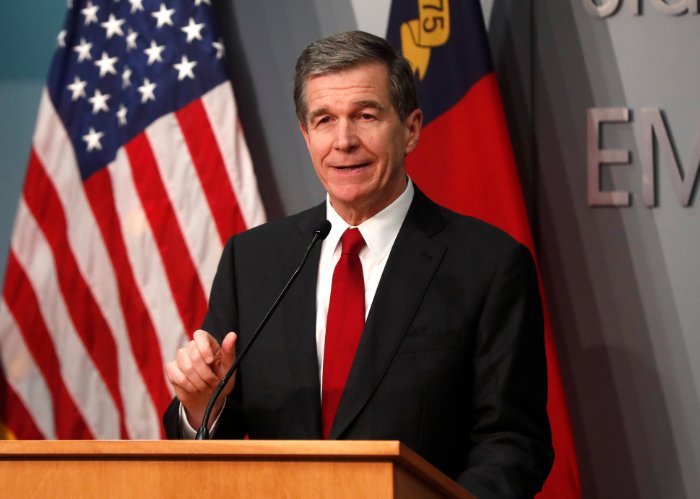
North Carolina Governor Roy Cooper.
By ANGELA FARR KING
North Carolina House Bill 10, also known as the Private School Voucher Expansion Bill, recently passed in the NC Senate on September 9 and the NC House of Representatives on September 11.
According to The Opportunity Scholarship Impact Analysis sent to The Taylorsville Times by the Governor’s office and created by the Office of State Budget Management (OSBM), “the Opportunity Scholarship Program (also known as the Private School Voucher Program) was created by the NC General Assembly in 2013. Scholarships are awarded based on a family’s household income and can be used to pay the required tuition and fees to attend an eligible K-12 private school.”
The OSBM also states that “The 2023 Appropriations Act SL 2023-134 expanded program eligibility and funding leading to nearly 70,000 new applications for the 2024-25 academic year, a more than 100% increase over 2023-24. 15,805 of new eligible applicants were funded, leaving 54,000 on the waitlist. Additional appropriations proposed in the Fiscal Year 2024-25 NC House and Senate budget bills would fund all remaining 2024-25 eligible applicants.”
According to the Impact Analysis, if the proposed House 10 Bill passes, the current number of new students receiving scholarships to attend private schools of 15,805 will possibly increase by a number of 53,706 for a total of 69,511.
Gov. Roy Cooper (D), reached out to The Taylorsville Times and offered a 10-minute interview to discuss House Bill 10 and its possible impact on public schools in North Carolina. Governor Cooper was asked to explain his concerns about the proposed bill to expand school vouchers for private schools and he said, “First, our public schools are chronically underfunded. Our legislature over the last few years has invested $5,000 less per student than the national average. They’ve dropped to 38th in teacher pay in the country. One study shows that NC ranks second to last in the country in how much of our gross state product that we invest in our public schools, so we have fallen behind.
“Now the legislature wants to take hundreds of millions of taxpayer dollars out of the public schools and give it to private school vouchers, even for the wealthiest North Carolinians and their plan is to take four billion out over the next decade. That is devastating for education across the board and we’ve got strong evidence to prove it. Studies show that private school vouchers do not improve student performance. Of course we wouldn’t even know in North Carolina because they’re providing no accountability measures for all of that taxpayer money that they are sending (to private school vouchers).
“Public schools have to hire certified teachers. They have to provide testing and they have to have accountability. They have to provide transportation. They have to provide food for students. They have to accept all students. They have to provide services for students with special needs. They have to provide counseling in the area of mental health. Private schools don’t have to do any of that. This is mostly going to take money and give it to people who have already made the choice to put their children in private schools,” Cooper said.
“In Alexander County, the numbers show that the county would lose about $450,000 in education money in the first year of this expanded voucher program and I know that Alexander has been having some local issues. It is having more problems than a lot of counties regarding funding, so this would make it even worse. These vouchers hurt rural schools the most because most of the private schools getting this taxpayer money are in urban areas. For example, Alexander has one private school that is a part of the voucher program and we have to remember that more than 8 in 10 students in Alexander County go to public schools. That’s where the money should go. We need to first fund our public schools before we adopt a private school voucher program,” the Governor stated.
Cooper was asked where this $450,000 would come from, specifically. Would it come from a specific pot of money in the education budget or was he referring to the ADM (Average Daily Membership) money that each district receives from the state per child to fund a variety of components, such as textbooks, equipment, supplies, teachers, etc…? Cooper responded by saying that he was primarily talking about the ADM money for each child that could possibly leave public school with each child that exits public school to opt for a private option.
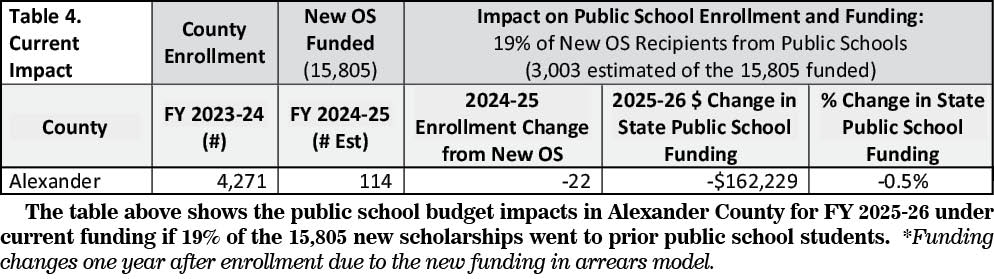
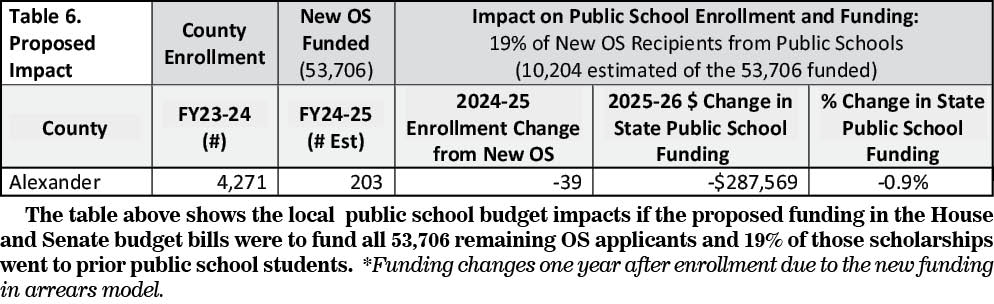
Governor Cooper’s opinion is that “this money (amount) shouldn’t be the same because public schools have to do so much more than private schools with that money than private schools have to do. What you’re seeing now, already in anticipation of this (voucher expansion), is that private schools are simply raising their tuition in the amount of the private school vouchers so a lot of parents are not going to be helped. We’ve seen that a lot of private schools in other states indicate that poorer children (still) can’t afford to go to them even with the voucher money.
“Let me be clear. I am not against private schools. I think they can be right for some children and families. We are not talking about taking away that choice. What we are talking about is not taking tax money out of the public schools to fund these private schools and we know that surveys show that parents are largely satisfied with the education that they are getting in public schools,” he said.
Governor Cooper was informed that parents in Alexander County have vocally expressed concerns about the public school system in Alexander County for the past several years. This dissatisfaction is also evidenced by the large enrollment in the one private school in Alexander County receiving voucher funding, which Gov. Cooper is aware of.
Millersville Christian Academy currently has an enrollment of 236. When compared to counties with similar population sizes, this is a very large number (this comparison was not part of the interview, but is included in the documentation in the link here and at the end of this article.)
Cooper was also told of the recent new leadership in Alexander County and the positive cultural shift that is currently happening in the Alexander County public school system. He was specifically told that the new superintendent of schools has brought a “breath of fresh air” to the public schools of Alexander County.
Cooper was then asked, on behalf of parents who are opting to send their students to private schools who are also taxpayers, “What is wrong with some of their tax money coming back to them so they can channel that into their children’s education?”
He responded as follows, “It’s part of our State Constitution that we provide every child with a sound basic education. Our public schools must be strong. We must first invest in public schools. What is happening is if you take money out of the public schools for private schools, you aren’t getting better education. The studies in other states have shown that. You’re also cratering the budget that could destroy public schools for the 81% of children that are continuing to go to public schools.”
Gov. Cooper was asked where he thought the money should go in public schools if he is able to successfully veto House Bill 10 and he responded by saying, “The best way to improve public schools is to have a great teacher in every classroom and a great principal in every school. We must invest to do that. We must provide them with the support that they need with teacher assistants. We need school counselors. We need bus drivers and the problem is that they (the legislature) are chronically underfunding our schools, making it harder for them to deliver the goods. That’s where it should go and they have a choice right now. $625 million dollars (the amount of the expansion bill) would provide an 8 ½ percent pay raise for teachers plus a $1,500 bonus. It would help us hire more teacher assistants, more counselors, and we would still have money left over. That’s how much money they are (proposing) for just one year for these private school vouchers and it will mostly go to people who already have their children in private schools, already have made that choice, and already can afford it. That means that people who have children in public schools will be hurt, particularly in rural areas.”
Governor Cooper closed by saying, “I think it’s important for people (in Alexander County) to talk with Steve Moree and Blair Eddins who are running for the House and with Senator Settle.”
Veto possible
House Bill 10 has passed in the Senate and the House and was presented to Governor Roy Cooper on Sept. 11, 2024. As with all bills, the Governor has 10 days to veto the bill or it becomes a state law.
Governor Cooper and his Deputy Press Secretary shared more documentation about the projected impact of the proposed Voucher Expansion Bill as promised and it can be viewed at the link here from the Office of State Budget Management (OSBM): www.osbm.nc.gov/opportunity-scholarships-2024-analysis/open.