
January is National Radon Action Month
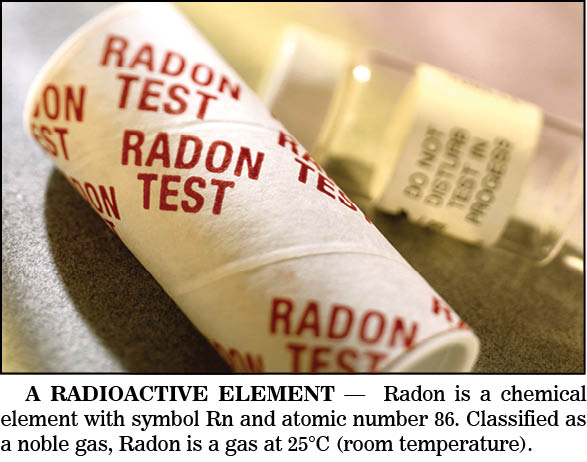
Unsafe level is 4 pCi/L or higher, top reading in Alexander is 288
In recognition of National Radon Action Month, the North Carolina Department of Health and Human Services is providing reduced cost radon test kits at radon.ncdhhs.gov. Radon exposure is preventable, and testing is the only way to know if you or your family is at increased risk.
A limited number of radon test kits were available earlier this month but due to the success of the program, the supply of free kits has been depleted.
Radon is an odorless, colorless gas released from the ground into outdoor air but can accumulate and reach harmful levels when trapped in homes and other buildings. Radon is responsible for approximately 21,000 lung cancer deaths annually across the U.S. including 480 deaths annually in North Carolina.
“Everyone in North Carolina is exposed to some level of radon, which can be dangerous to your health,” said Phillip Gibson, NC Radon Program Coordinator. “We recommend that every home be tested for radon so you can know your risks and take the necessary steps for mitigation.”
To support increased radon testing and mitigation, NCDHHS has updated data and resources available to help North Carolinians understand the radon risk in their communities. Recent data show 90% of all North Carolina counties (including Alexander and its surrounding counties) have elevated levels of radon present.
A level of four picocuries per liter (pCi/L) or higher in your home is considered unsafe.
The highest radon level measured in Alexander County was 288 pCi/L.
The 2023 North Carolina State Health Improvement Plan and the 2025-2030 North Carolina Cancer Plan include reducing radon exposure through testing and mitigation as a key priority to improving life expectancy statewide. In addition to providing low cost radon test kits, NCDHHS continues to educate communities across the state to ensure people take appropriate actions to protect themselves and their families from dangerous levels of radon.
Visit radon.ncdhhs.gov for more information and to order your air test kit.
Radon in Well Water
The NC Radon Program recommends to first test your air for elevated radon levels. Should your radon test for the air indicated an elevated radon level, testing for radon in your well-water maybe helpful to determine if the home’s plumbing is the pathway in which the radon is entering your home.
In Alexander County, much of the county shows Moderate and High Risk for private well-water to have elevated levels of radionuclides.
If your drinking water comes from a private well, the NCDHHS Division of Public Health suggests testing it for radon, gross alpha, gross beta, and Uranium. Exposure to radionuclides via drinking water has linked with various health effects: Radon – stomach cancer; Uranium – Kidney damage, cancer; and Radium – bone cancer.
The NC Radiation Protection Section advises homeowners with private wells to follow the recommendations set forth by the North Carolina Radon-in-Water Advisory Committee.
Inhalation of radon in air poses a greater health risk than ingestion of radon through water. The recommendation seeks to address the combined sources of radon from soil gas and radon released from water. The goal is to limit the combined radon exposure in the home to no more than the Environmental Protection Agency (EPA) recommended level of 4 pCi/L. As a general rule, 10,000 pCi/L radon in water will contribute 1 pCi/L to air in the home.
Radon can be transported into a home through the plumbing of homes receiving water from a well. The concern with high levels of radon in water is that it can elevate the levels of radon in the home’s air. When testing water for radon, it is important to know that the data result, the number value, is viewed differently.
The risk of radon in drinking water has been estimated by the EPA to cause 168 cancer deaths per year in the United States. The majority of these deaths (about 89%) are caused by breathing in radon that has gassed out of the water while washing dishes or showering, leading to lung cancer.
Approximately 80% of exposure to radioactivity is natural and the rest comes from man-made sources. For example, exposure can occur from naturally occurring radiation from the emission of radon gas from rocks and soil, and radioactive elements in groundwater.


Good reminder article. A lot of people still don’t realize radon is invisible and can be really dangerous. Testing your home is honestly such a small step that can make a big difference.
It’s a simple but important message—radon is invisible, but the risk is real, and a quick test is really the only way to know what’s going on indoors.